



Programmatic video ads are causing a revolution in digital advertising. Video content has helped 82% of marketers
convert customers, and viewers remember 95% of video messages compared to 10% with text.
Programmatic video ads had reached global spending of $558 billion in 2023, but marketers have scratched the surface
of its full potential. Automated programmatic video ad buying allows for instant bidding and precise targeting. Many
powerful features go unused today. Advanced audience segmentation and fraud prevention tools can improve video
campaign performance.
Video ads have evolved beyond basic pre-roll formats to include mid-roll, outstream, and connected TV placements
through programmatic buying. This tech supports different video ad specs like VAST and VPAID. These specs allow for
better interactivity and measurement.
Most marketers stick to simple programmatic video strategies like targeting by demographics and using standard
bidding. However, they often overlook more advanced options. For instance only 15% of marketers use complex audience
segmentation in their programmatic video campaigns even though it has proven to boost conversion rates.
The next parts will look at these hidden features and show you the unused potential that most people in marketing
haven’t found yet in video ads that use programmatic methods.
Advanced Targeting Capabilities in Programmatic Video Advertising
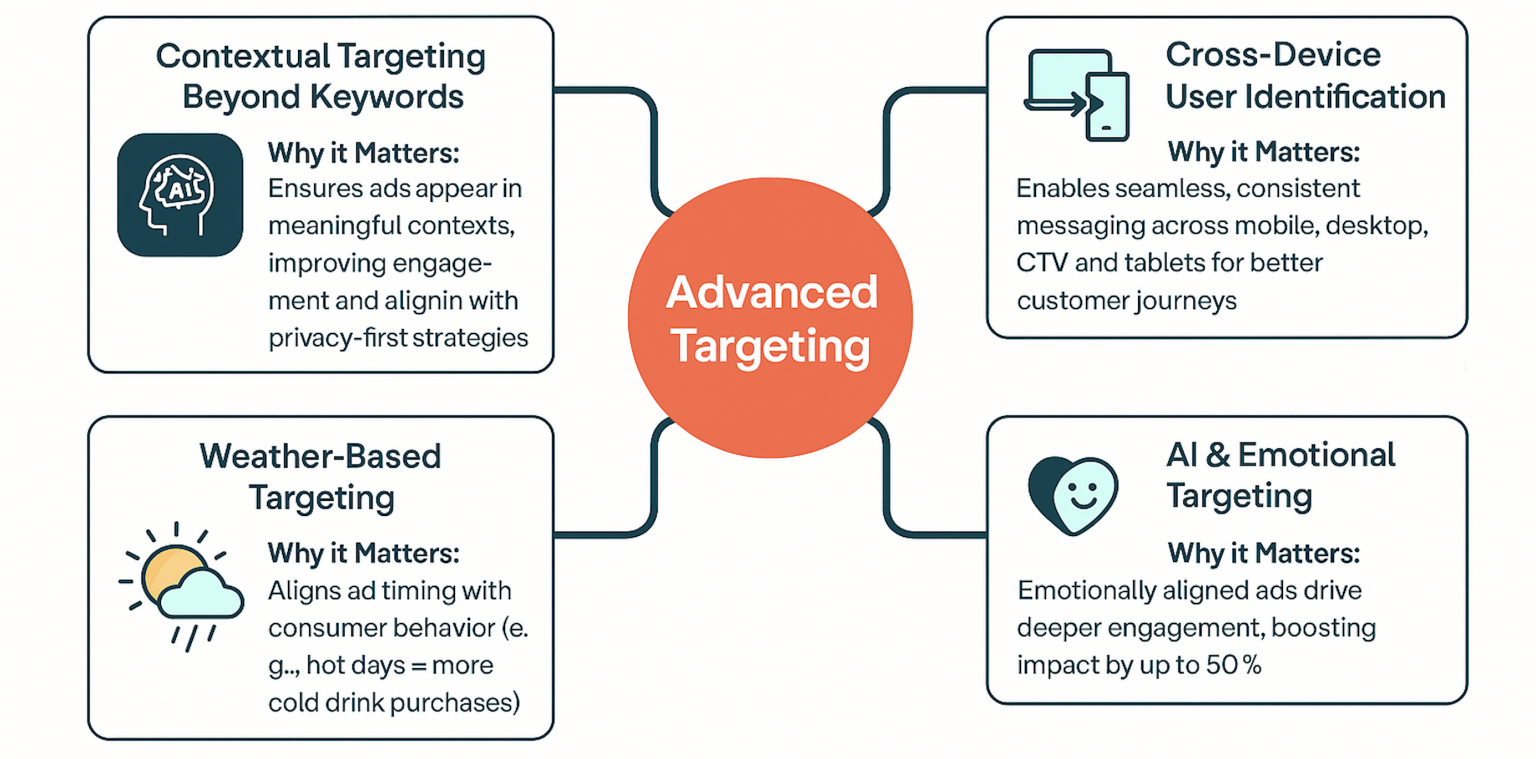
Video ads that use programmatic methods now do more than just aim for the usual groups of people. Advanced ways to
target help get messages to the right people.
Contextual Targeting Beyond Keywords
Content targeting has undergone a big shift. Basic keyword matching no longer cuts it – now it’s all about grasping
what content means. Smart AI tools analyze and score content similarity to get the gist of a story, not just pick
out random words. This lets ads show up in spots that fit their message and make sense to viewers. Privacy rules
have made context-based targeting more useful since it looks at the content itself instead of gathering personal
info.
Cross-Device User Identification Techniques
Cross-device identification (XDID) links users across different devices and allows consistent messaging throughout
the customer experience. This technology has an impact on two main methods:
- Deterministic matching uses known user data like email addresses and social media logins to
make clear connections between devices. - Probabilistic matching examines anonymous signals such as IP addresses, browser types, and
location data to guess connections with statistical confidence.
Device graphs created through these methods give marketers a clear picture of how people move between websites and
platforms. This knowledge enables them to send messages in a sequence that matches the customer’s journey. This
ability proves useful as people switch between their phones, computers, tablets, and smart TVs throughout the day.
Weather-Based Targeting for Video Campaigns
Weather data has the second biggest impact on consumer behavior right after economic conditions. Programmatic
platforms now have the ability to give priority to weather-dependent video ads when certain conditions happen within
targeted geographic areas. Brands can reach out to consumers during ideal condition mixes that line up with wanted
behaviors like shopping in stores or ordering food delivery. Weather targeting turns on relevant local ads that
shape consumer action based on current or predicted weather signals.
AI and Emotional Response Targeting
Emotional AI examines the emotional tone of content to place ads in contexts that evoke similar feelings. These ads
have a 50% higher chance to grab viewer attention. This tech processes billions of digital content pieces each day
and groups them into emotional signals. Advertisers can then sync their placements with the content’s emotional
vibe. Emotions drive up to 86% of buying decisions, and this matching creates stronger audience bonds. Emotional AI
focuses on content analysis instead of tracking consumers, which keeps it in line with privacy rules in today’s
regulated digital world.
Hidden Optimization Features for Programmatic Video Ad Buying
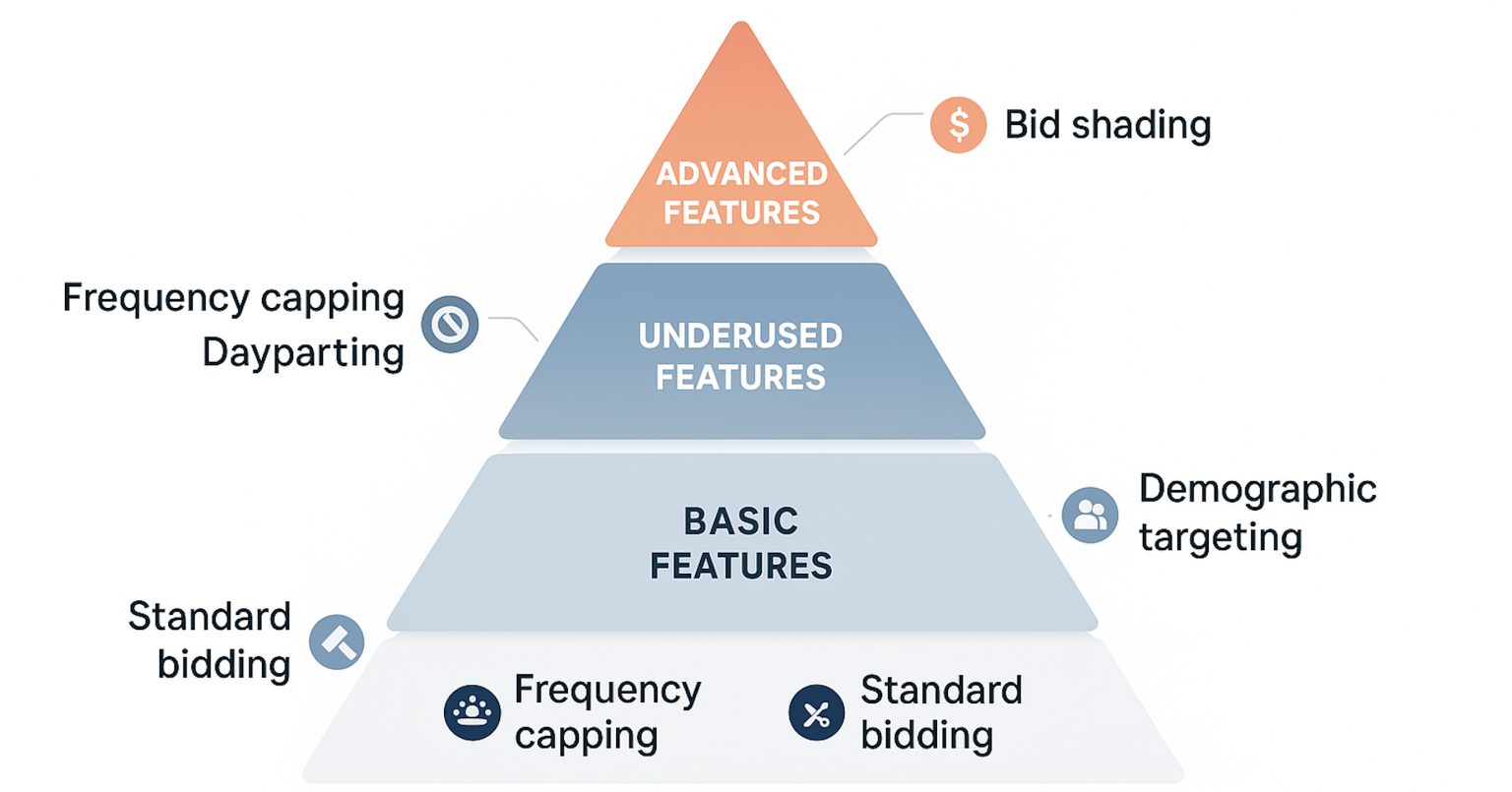
The success of programmatic video ad buying has a dependency on optimization features that marketers often miss.
These hidden tools can boost campaign performance and cut costs when applied.
Frequency Capping Strategies Most Marketers Ignore
Frequency capping limits how many times viewers see the same ad in a specific time frame. The idea seems
straightforward, but marketers often fail to see its strategic worth. Smart frequency management prevents viewer
fatigue from overexposure to ads, which damages campaign outcomes. Ad platforms offer several capping choices:
- Cap impression frequency – Limits how often the same user sees ads.
- Cap view frequency – Keeps a lid on full video views by one user.
- Time capping – Stops ads from showing up during certain times.
Capping strategies change based on where a customer is in their journey. You’ll need different frequency settings for
new prospects compared to existing customers. These caps help cut down on waste and keep viewers engaged throughout
your campaign.
Dayparting Techniques to Boost Engagement
Dayparting displays ads when your audience pays the most attention. This approach requires at least three months of
website data to identify the best-converting times. Check when people act most often and tweak your bids – increase
them 15-20% during busy periods and decrease them 20-25% when engagement slows down.
Many marketers focus on too few hours, which cuts their reach. The most effective dayparting lines up ad delivery
with daily routines across multiple time zones. This becomes key for worldwide campaigns because online behaviors
differ between regions.
Bid Shading Technology: What It Is and Why It Matters
Bid shading helps advertisers save money and has become crucial with first-price auctions in programmatic
advertising. This clever algorithm reduces bids in first-price auctions to prevent advertisers from paying too much
while ensuring good delivery.
The system examines won and lost impression prices to forecast the ideal bid values based on websites, ad sizes, and
market rivalry. Big platforms like Google DV360, GeoSpot Media, The Trade Desk, and MediaMath provide this feature.
Advertisers cut their impression costs by about 20% when they use bid shading. This approach strikes a balance
between saving money and winning bids – more aggressive shading reduces costs but might miss out on valuable ad
spots. Your campaign objectives should shape how bold you get: performance-focused campaigns can shade more, while
brand awareness efforts need less shading to maintain visibility.
Creative Optimization Features Most Marketers Miss
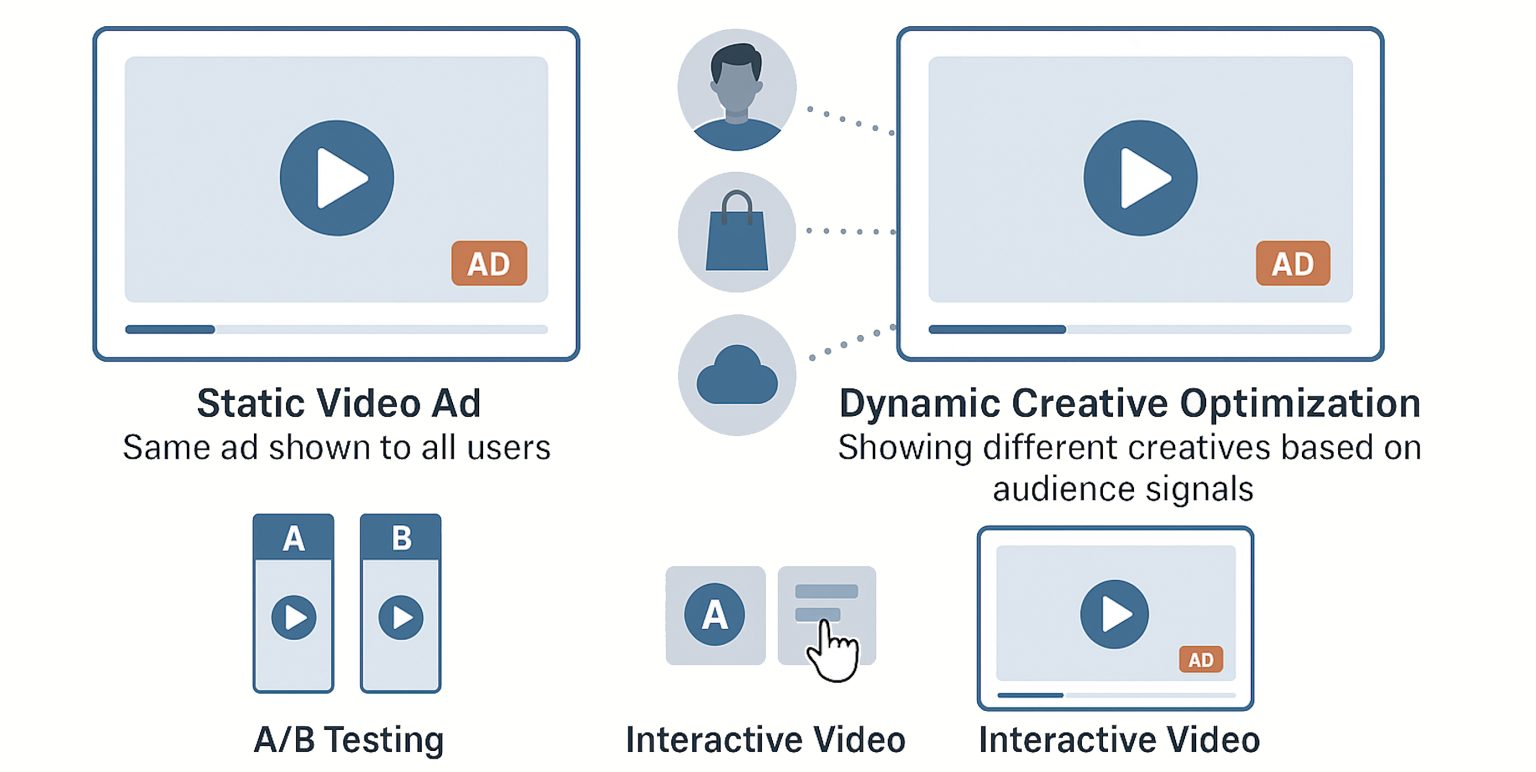
Video ads with creative elements have a big impact on marketing campaigns. Many pros don’t know about powerful tools
that can improve engagement and boost sales.
Dynamic Creative Optimization for Video
Dynamic Creative Optimization (DCO) has an impact on video ad components. It uses live data to create experiences
tailored to individuals. This tech builds multiple versions quicker with the same original creative. It customizes
elements to suit specific audiences contexts, and past results. It eliminates the need to create many versions for
different locations and audiences. Indeed dynamic video has become more crucial as in-stream video and streaming TV
channels consume more advertising budgets. However many marketers don’t tap into DCO’s potential to adapt at every
customer touchpoint.
A/B Testing
A/B testing covers much more than basic elements. Marketing teams should check these creative parts:
- Various pictures, clips, and visuals to discover what leads to the most interaction.
- Options for calls-to-action to understand what motivates users to take action.
- Different versions of text to examine various ways of getting the message across.
Google Ads allows you to run video experiments with up to 10 test arms. This enables marketers to test multiple
variables at the same time. Begin with broad variables in video A/B tests before you move to smaller details. This
ensures your results have statistical validity.
Interactive Elements Support in Standard Formats
Regular video formats now have interactive features that change passive watching into active engagement. These ads
contain clickable areas, buttons, or pop-ups inside the video. Users can act without exiting the ad. Interactive
parts create absorbing experiences that hold viewers’ attention longer than typical video ads. These ads also gather
useful info about how users respond and what they care about. Marketers should include clear instructions to act in
videos and make clickable parts stand out with movement or symbols. This helps viewers interact more.
Underutilized Analytics Tools in Video Programmatic Platforms
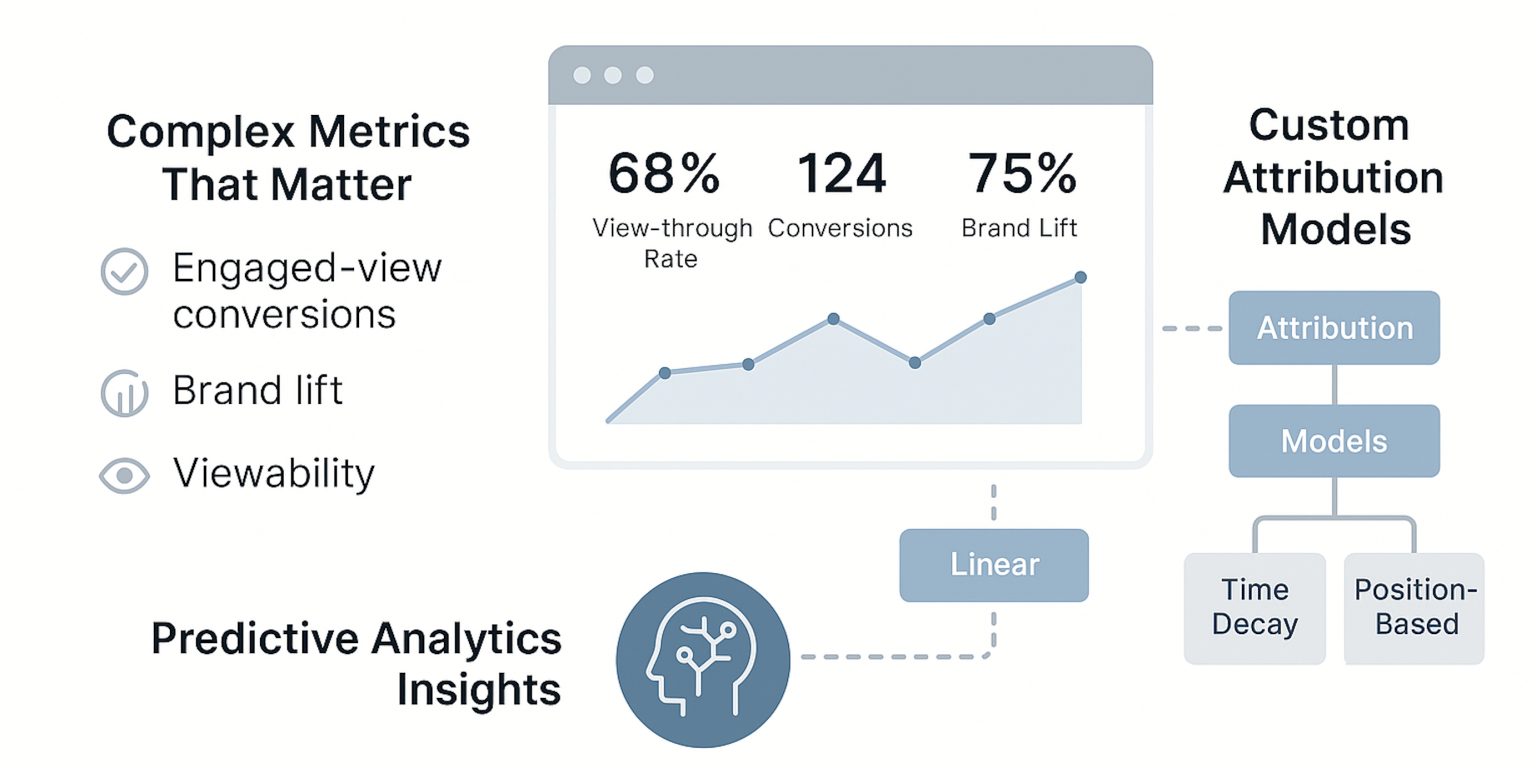
Most marketers have touched the tip of the iceberg when it comes to data measurement capabilities in programmatic
video advertising platforms. They usually focus on basic metrics and overlook powerful analytics tools that could
boost their campaign performance.
More Than Just View-Through Rates: Complex Metrics That Count
View-through rates don’t tell the whole story. Engaged-view conversions indicate when viewers watch at least 10
seconds of a skippable ad and convert within a set time frame. Viewability metrics gauge how often people see the
ad, not just when it pops up. Brand lift metrics, which some accounts can access, reveal shifts in brand perception
after ad exposure. Also earned actions keep tabs on post-view activities like website visits or engagement. These
metrics offer a closer look at how audiences act beyond their initial impressions.
Custom Attribution Models for Video Campaigns
Standard last-click attribution assigns all conversion credit to the final touchpoint, which doesn’t seem fair.
Custom attribution models distribute value across multiple channels that shape buying decisions. Video marketers can
choose from several baseline options:
- Linear models – Give credit to all touchpoints
- Time decay models – Give more value to interactions that happen closer to conversion
- Position-based models – Focus on first and last touchpoints while giving less weight to middle
interactions
Creating a custom model that works well involves finding key points that boost conversion. Models perform better when
they zero in on visible ads or views that engage users. This approach gives a clearer view of how video campaigns
are doing.
Predictive Analytics Features You’re Not Using
Predictive analytics transforms past data into future insights. These AI-powered tools can forecast which video ads
will resonate most with specific audiences. Weather-based prediction models launch relevant campaigns based on
expected conditions. Cross-channel attribution forecasting reveals which touchpoints deliver the highest incremental
value helping to optimize budgets across display, search, and video formats.
These analytics tools that don’t see much use give marketers deeper insights into how viewers engage with
programmatic video ads. Having better data helps make smarter choices when fine-tuning campaigns.
Getting Your Programmatic Video Strategy Ready for the Future
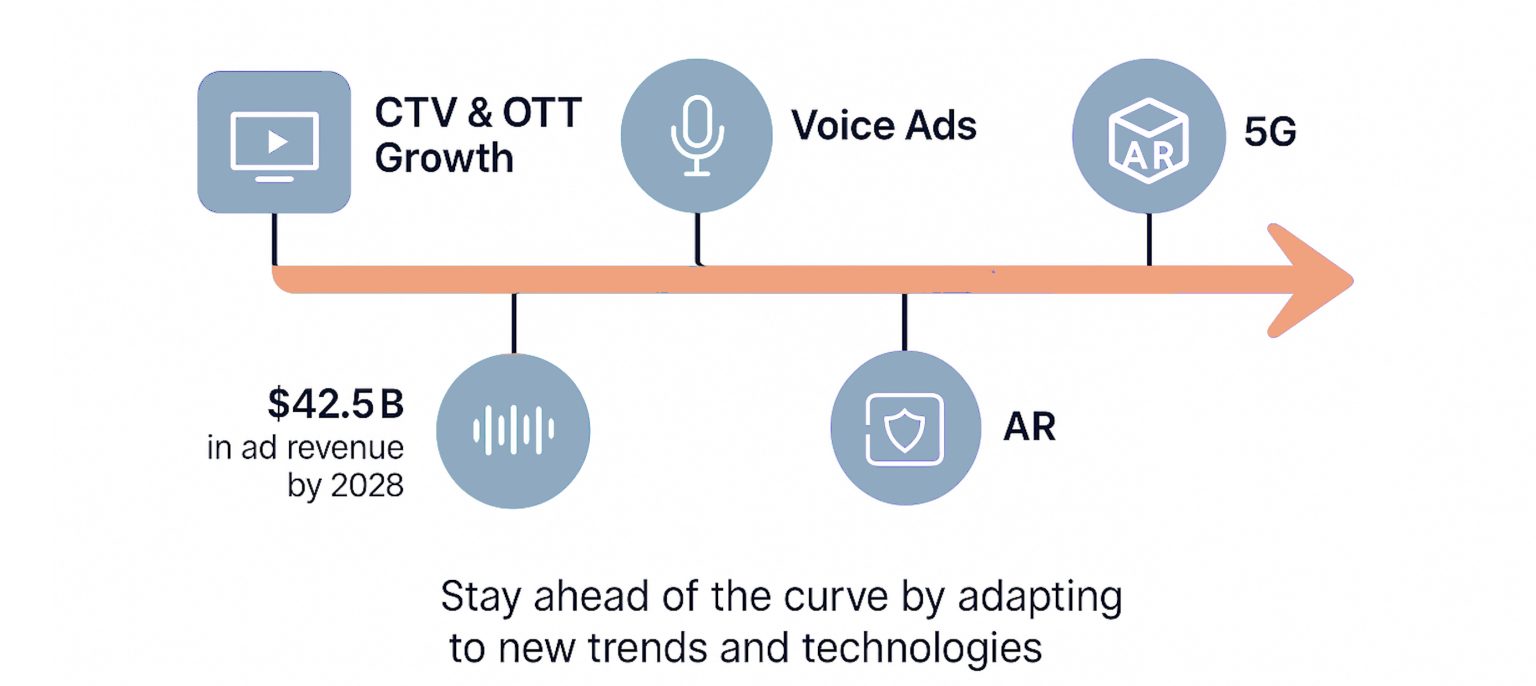
Marketers need to embrace new ideas and upcoming technologies that are causing a revolution in programmatic video
advertising to get ready for the digital world of tomorrow. Companies that adjust to these changes get an edge over
their competitors in the market.
Ability to Integrate CTV and OTT
Viewers are switching from cable TV to Connected TV (CTV) and Over-The-Top (OTT) platforms. By 2028, CTV ads will bring
in $42.50 billion for advertisers. These platforms help reach homes that don’t watch regular TV and manage how often
ads show up across networks. The main issue is that each CTV device uses different hardware, software, and ways to
identify users. To work well, we need bidding strategies that make the most of ad slots in AVOD (Always-On Video
Demand is a programmatic video advertising strategy where video ads run continuously, ensuring consistent reach and
engagement across digital platforms) settings.
Voice-Activated Device Targeting
Voice technology has a profound impact on how users engage with programmatic video ads. People who own smart speakers
react to ads – 53% claim they would act after hearing one. These interactive audio ads use natural language
processing to grasp users’ intentions and provide suitable responses. Pizza Hut and Estée Lauder have rolled out
voice-activated campaigns. Estée Lauder’s “Send Me a Sample” campaign teamed up with Spotify and Google Home to
allow listeners to request samples through voice commands.
AR Support Features
Current programmatic platforms have the ability to support 2D augmented reality (AR) ads that fit into 3D settings
like billboards or street signs in apps. These ads often show up in gaming apps and target users based on their
hardware, platform, age, rating, location, and what content they like. The industry is heading towards 3D AR
integration as tech providers come up with ways to deliver immersive experiences through programmatic means.
5G Video Delivery Choices
5G technology has an impact on ad delivery eliminating buffering and delay. This strong infrastructure enables
high-quality video ads with immersive elements that weren’t feasible on slower networks. Advertisers can now include
AR virtual reality, and interactive features that give instant responses. Many users aren’t aware of 5G’s advantages
yet, which opens up an opportunity for advertisers to connect with people who have 5G-ready devices.
GeoSpot Media’s Take
GeoSpot Media’s team looks at thousands of programmatic video ad campaigns every year. We spot patterns that separate
winning campaigns from losing ones. Our long-term experience reveals that marketers use 30% of programmatic video’s
potential.
This article highlights advanced features that give advertisers fresh competitive edges. Our programmatic experts
found something noteworthy: mixing advanced features leads to bigger wins than using them . For example, advertisers
who combine emotional response targeting with dynamic creative optimization see 65-85% better engagement than those
who use just one feature.
We recommend advertisers try these hidden features one at a time:
- Start with standard programmatic video advertising platforms to establish baseline performance
- Implement advanced audience segmentation techniques
- Create optimization tools and fraud prevention mechanisms
Our client work shows something important: programmatic video ad buying is more effective when marketers form
cross-functional teams. Technical experts who understand bidding mechanisms should collaborate with creative teams
who develop ads. This teamwork allows creative elements to enhance technical optimization rather than hinder it.
Data from companies of various sizes indicates that certain features yield greater returns for specific objectives:
- Retail brands benefit most from weather-based targeting combined with dynamic creative optimization
- B2B companies achieve the best results using purchase intent signals and custom attribution models
- Financial services obtain the highest conversion rates by combining fraud prevention tools with contextual
targeting
First-party data strategies play a key role in programmatic video advertising success as third-party cookies
disappear. GeoSpot Media continues to test new technologies to uncover hidden features that will define the future
of programmatic video excellence.
Conclusion
Programmatic video advertising has evolved past simple automation. It now provides marketers with powerful tools that
many have yet to explore. Advertisers can significantly boost their campaign performance through advanced audience
segmentation complex targeting methods, and dependable fraud prevention systems.
The stats paint a compelling picture. Marketers tap into just 30% of programmatic video’s potential. Companies that
mix emotional response targeting with dynamic creative optimization have noticed a 65-85% boost in engagement. Add
to this cross-device tracking and weather-based targeting, and you’ve got a recipe to reach audiences at perfect
times with pinpoint accuracy.
Programmatic video advertising has a promising outlook. Smart TVs, voice control, AR, and 5G networks open up fresh
avenues to connect with viewers. These breakthroughs, plus hidden tools already in place, make programmatic video
key to today’s digital ad plans.
Marketers who nail these complex skills while keeping solid anti-fraud systems in place end up winning. They’re able
to build video ads that perform better and strike a chord with viewers. The secret is mixing technical fine-tuning
with top-notch creativity so all the pieces fit together to have the greatest effect.